Pediatric Ophthalmology:
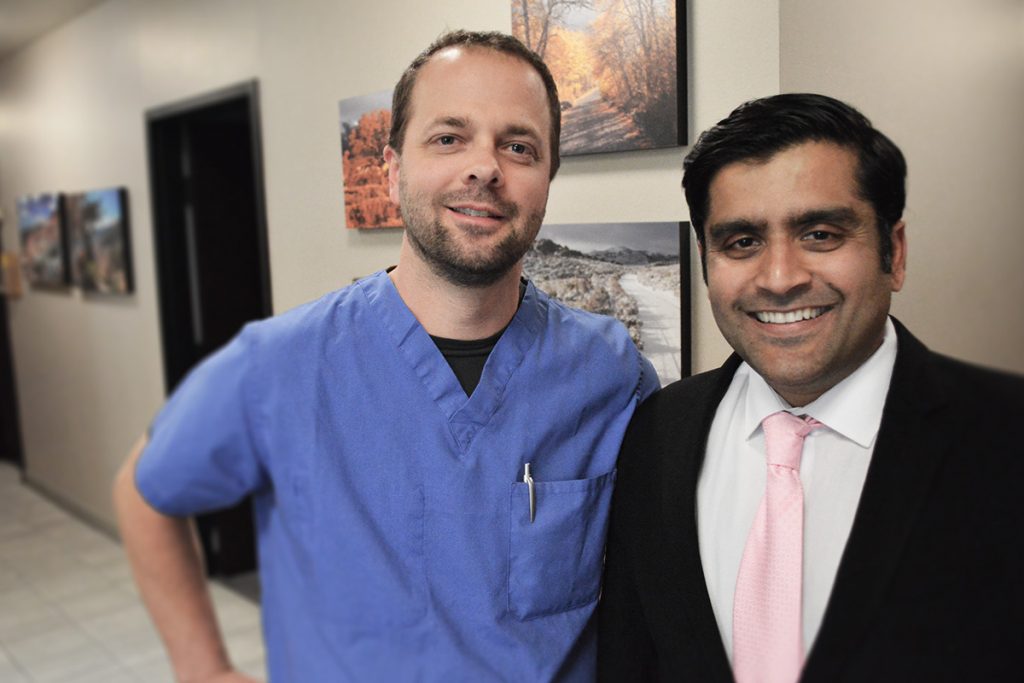
Sierra Eye Associates is proud to have two
ophthalmologists in Northern Nevada with fellowship training in Pediatric
Ophthalmology and Strabismus (cross-eyed) treatment are L. Alan
Johnson, M.D. and Pauline Hong M.D.
Why a pediatric ophthalmologist?
A pediatric ophthalmologist is a medical doctor,
trained in the specialty of ophthalmology and in the subspecialty of pediatric
ophthalmology and strabismus (misalignment of the eyes). Many pediatric
ophthalmologists restrict their practice to children or adults with related
problems and thus are particularly qualified to treat pediatric vision problems.
Ophthalmologists are medical doctors (MD's) who
have had four years of medical school, at least one year of internship training
in a hospital, and at least three years of residency training in ophthalmology.
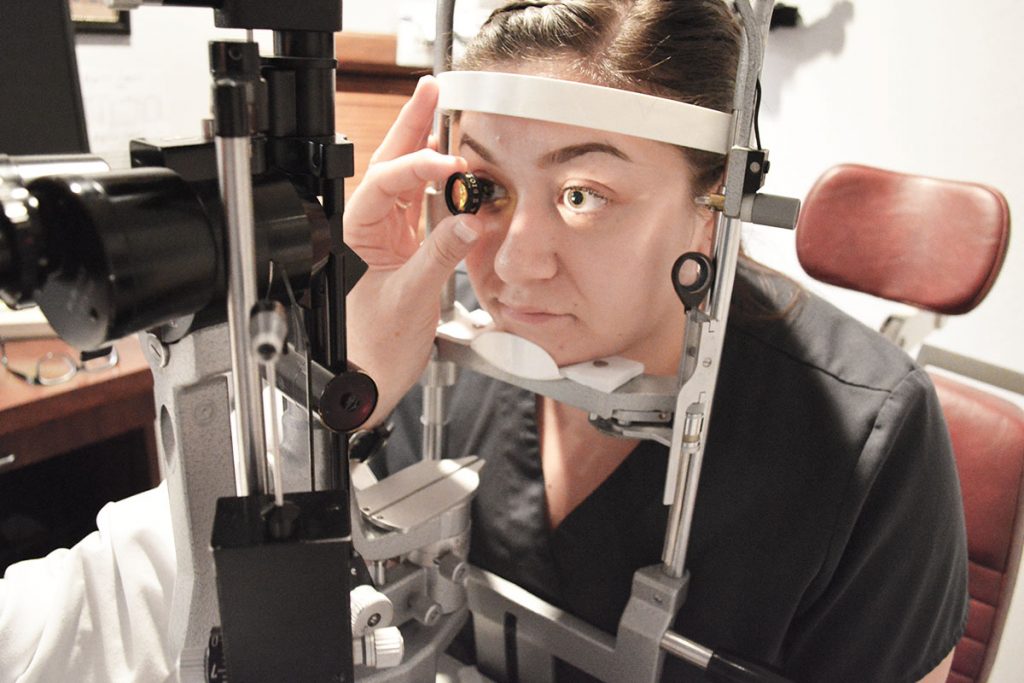
They are equipped to provide total eye care: they examine for and fit eye
glasses; prescribe oral, intravenous, and topical medications; and perform all
types of laser and incisional eye surgery. Pediatric ophthalmologists have
chosen to specialize in eye disorders unique to infants, children and
adolescents including inherited eye diseases, amblyopia (lazy eye), strabismus
(crossed or wandering eyes), and refractive errors (nearsightedness,
farsightedness, and astigmatism). Subspecialty training in pediatric
ophthalmology requires at least one year of fellowship.
Children's eyes and vision are still developing
after birth, so many of the diseases that affect their eyes can have a life-long
impact if untreated. Pediatric ophthalmology evolved over the past 30 years in
response to the exponential growth of information about children's eye problems
and advances in surgical and non-surgical techniques to address those problems.
In addition, as part of their training, pediatric ophthalmologists learn how to
examine a frightened or uncooperative child in a manner which is non threatening
but which is effective in obtaining the most information about that child's
vision. In this way a more accurate and complete diagnosis and treatment plan
can be achieved.
Thus a pediatric ophthalmologist is specifically
trained to diagnose and treat children with eye and vision problems. Their
training and expertise uniquely qualify them to protect a child's visual future.
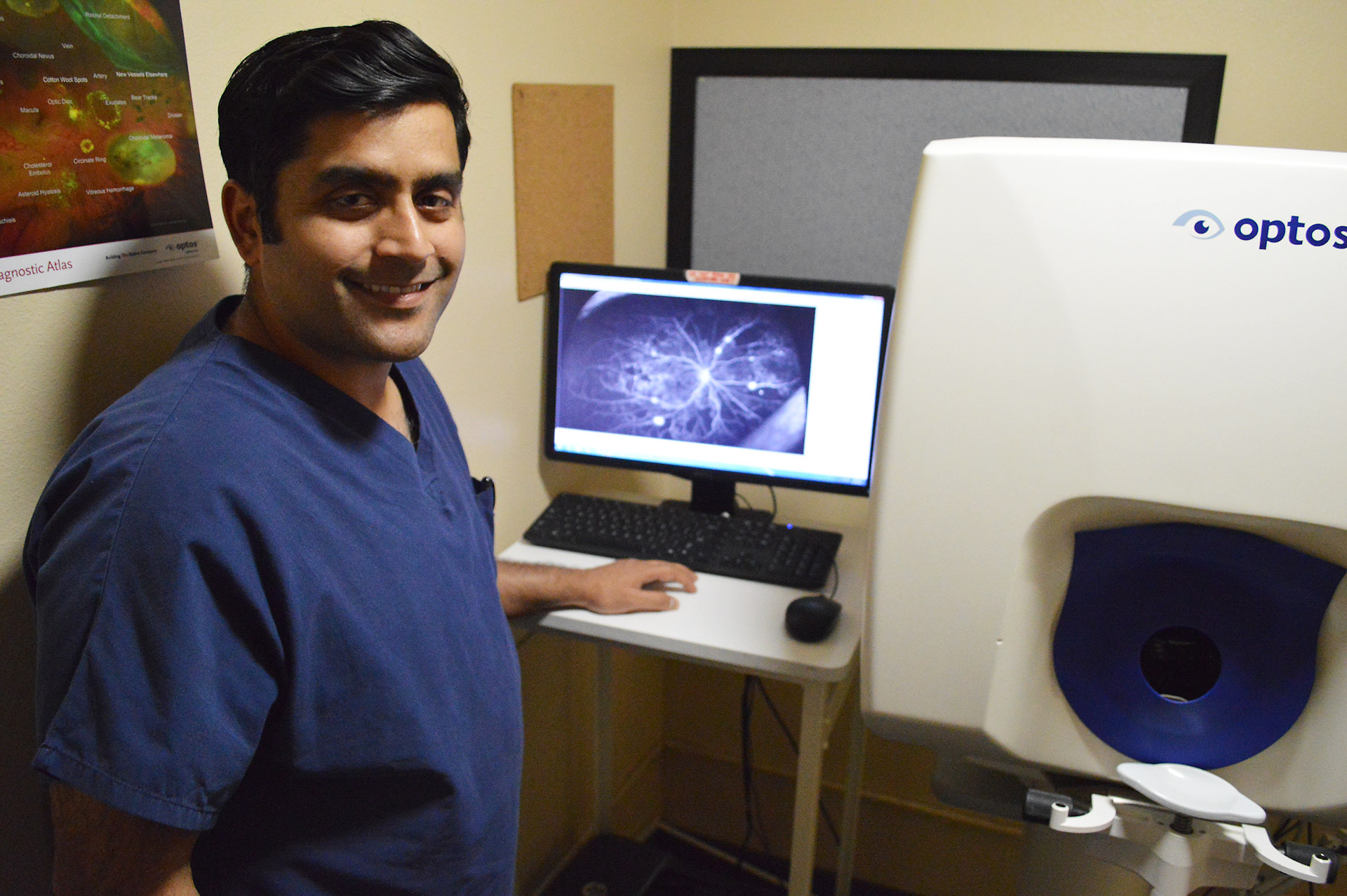
Dr.'s Alan Johnson and Pauline Hong specialize in Pediatric Ophthalmology. Dr.'s Alan Johnson and Pauline Hong's areas of expertise include surgical correction for
strabismus (crossed or wandering eyes), diagnosis and treatment for amblyopia
(lazy eye), blocked tear ducts, congenital eye diseases,
and eye examinations and glasses for children.
What is a "lazy eye"?
Amblyopia, the medical term for "lazy
eye" is reduced vision in an eye that can not be corrected by glasses and
which has no other organic cause (for example a scar in the eye). Many people
will call an eye lazy because the lid droops or the eye wanders but these are
actually distinct conditions. An amblyopic eye often appears perfectly normal,
so it is often detected only through vision screening. In childhood, the
connections between the eyes and the brain are just developing. The brain must
learn how to put together information from the two eyes to make one picture. If
the image from one eye is clear and the other blurry, or if the eyes are crossed
and send two different pictures, the brain will choose to ignore the pictures
being sent by one eye. When the brain consistently ignores information being
sent by an eye, that eye will become weak, just as an arm, which has been in a
cast, will not have equal strength to the fellow arm. Amblyopia is treatable
until the age of 7 or 8 years--the age at which visual maturation is thought to
be developmentally complete. Amblyopia is treated by forcing the child's brain
to use the weaker eye--this can be achieved by wearing a patch over the stronger
eye, or blurring the vision in the stronger eye with glasses or eye drops. The
predisposing conditions also require correction such as glasses or surgery.
What causes strabismus (crossed eyes or
wandering eyes)?
The answer is not really known. Probably it is a
combination of genetic and environmental influences. Misalignment of the eyes
may present as one eye appearing to look straight ahead and the other eye
pointing inward, outward, upward, or downward. When a child's eyes cross or one
eye wanders, there often is loss of depth perception because the eyes are not
working together. The sooner these conditions are treated, the more likely that
this depth perception can be regained. The most common age for strabismus to be
present is between age 2 and 4 years, although some children are born with
strabismus and in others it may not be apparent until the child is slightly
older. Treatment of strabismus often requires the use of glasses, sometimes
surgery, and rarely exercises. Often, amblyopia is also present which must be
treated as well. Strabismus rarely corrects itself, so it is not something a
child will simply outgrow.
| Medical term |
Definition of term |
Common term |
![[Illustration of eye turned in]](images/ef-s-in.gif) |
Esotropia
(convergent squint) |
Eye turned in |
Cross-eyed
Boss-eyed |
![[Illustration of eye turned out]](images/ef-s-out.gif) |
Exotropia
(divergent squint) |
Eye turned out |
Wall eyes |
![[Illustration of eye turned up]](images/ef-s-up.gif) |
Hypertropia
(vertical) |
Eye turned up |
![[Illustration of eye turned down]](images/ef-s-down.gif) |
Hypotropia
(vertical) |
Eye turned down |
When should my child have a complete eye
examination?
Ideally, all children should have a complete,
dilated, ocular examination between the ages of 2 and 3. Unfortunately,
many insurance companies will not pay for a routine examination if there is no
problem found. So many parents and pediatricians rely on the vision screenings
provided by local organizations. A vision screening is
not a substitute for a complete examination and certainly, if there
is any suspicion that the child is having difficulty seeing or has strabismus or
amblyopia. In these cases, the child should be examined as soon as possible.
Even infants can have a complete examination so no child is too young to be
examined.
Amblyopia (lazy eye) affects 1 out of 20
children. It is the most common cause of visual loss in young people (more than
eye disease and trauma combined!).
Strabismus (crossed eye) affects 1 out of 20
children. It occurs equally in boys and girls. Adults who develop strabismus
usually will see double.
Glasses are prescribed for children to treat
amblyopia and strabismus, and also to correct blurred vision. Glasses prescribed
for blurred vision alone are simply aids to improve vision and the eyes will not
be damaged if the glasses are not worn.
Learning disabilities are not caused by vision
problems but are malfunctions in the area of language processing in the brain.
Because amblyopia and strabismus are fairly common, some children with learning
disabilities may have them and vice versa. Special glasses and vision therapy
rarely will help a child with a learning disability and the best treatment is
personal tutoring.
Please call (775) 329-0286 if you would like
to schedule an appointment.